
Informed Consent — Official Full Visual Infographic
High-resolution study sheet and visual guide
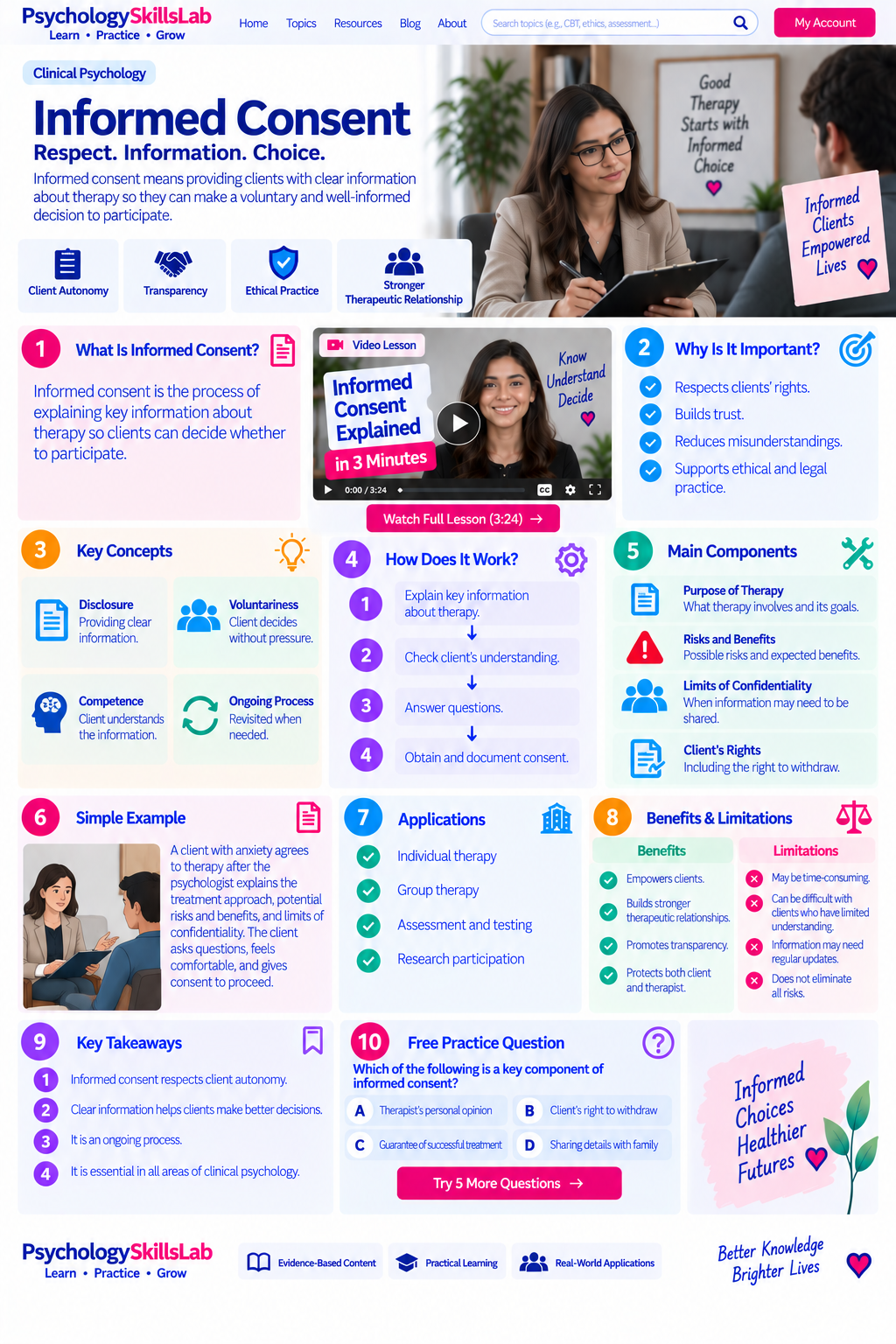
Informed Consent
Respect. Information. Choice.
Informed consent is the collaborative clinical process of providing clients with clear, comprehensive information about therapy so they can make a voluntary, knowledgeable decision to participate in care.

"Good Therapy Starts with Informed Choice."
What Is Informed Consent?
Informed consent is an ongoing ethical dialogue through which psychologists explain the nature of psychotherapy, expected risks and benefits, fees, limits of confidentiality, and treatment alternatives, allowing clients to exercise genuine autonomy.
- check_circle Not simply a legal document to sign; it is a continuous therapeutic communication process.
- check_circle Requires ensuring the client has legal capacity, understands the treatment, and agrees without coercion.
- check_circle Affirms the client's absolute right to decline, pause, or withdraw from treatment at any time.
Informed Consent Explained in 3 Minutes
Know • Understand • Decide ❤️
Why Is It Important?
- check_circle Respects fundamental client autonomy, agency, and self-determination.
- check_circle Fosters mutual transparency and trust right from the intake appointment.
- check_circle Significantly minimizes confusion, misaligned expectations, and ethical complaints.
- check_circle Establishes a solid ethical and legal foundation for evidence-based interventions.
Key Concepts
Disclosure
Clearly presenting all essential clinical and financial details.
Voluntariness
Deciding freely without pressure, manipulation, or coercion.
Capacity
Verifying the client understands the choices and consequences.
Ongoing Process
Re-evaluating consent as goals or therapeutic modalities adapt.
How Does It Work?
Explain the therapeutic approach, expected timeline, risks, and benefits.
Assess and confirm the client's comprehension of the information.
Answer all questions regarding fees, emergencies, and alternatives.
Obtain signed consent and continuously revisit throughout therapy.
Main Components
Purpose of Therapy
Clear description of techniques, goals, and treatment models.
Risks & Benefits
Discussing possible emotional discomfort alongside positive gains.
Confidentiality Limits
Outlining exceptions like imminent risk or mandated abuse reporting.
Client Rights
Explicit right to discontinue treatment without negative repercussion.
Simple Example
A client starting exposure therapy for severe OCD expresses worry about doing difficult behavioral challenges.
The psychologist explains how exposure works, discusses temporary emotional discomfort, emphasizes that the client remains in control of pacing, and answers all questions before obtaining consent.
Applications
- check_circle Individual, couples, and family psychotherapy
- check_circle Group psychotherapy and support groups
- check_circle Comprehensive psychological and neurocognitive assessments
- check_circle Research studies, clinical trials, and survey research
Benefits & Limitations
- check Empowers clients as active partners in their health decisions.
- check Reduces liability risks and prevents misunderstandings.
- check Strengthens the therapeutic bond through honest communication.
- close Can feel administrative and dry if treated merely as paperwork.
- close Assessing competence in clients with cognitive deficits requires care.
- close Unexpected clinical crises may require immediate temporary adjustments.
Key Takeaways
Free Practice Question
6 High-Yield Exam Simulation Questions
Which of the following is an indispensable element of legally and ethically valid informed consent in psychotherapy?
Client autonomy dictates that individuals retain the right to terminate or pause therapy at will without punitive consequences, which must be clearly stated in the consent agreement.
At what point in the therapeutic process must informed consent be initiated?
APA Standard 10.01 mandates that informed consent be discussed as early as feasible in the therapeutic relationship, usually during the initial intake.
If a psychologist implements a novel or experimental technique with limited empirical backing, what must they tell the client?
Under APA ethical standards, when treatments are emerging or experimental, psychologists must inform clients of alternative established therapies, potential risks, and voluntary participation.
In telehealth psychotherapy, what additional item must be covered in informed consent?
Telehealth guidelines mandate identifying the client's physical location, verifying local emergency services, and discussing technical security limitations.
When a client is legally incompetent to give consent (e.g., minor or severe dementia), what should the psychologist obtain?
Ethical practice requires obtaining legal consent from the authorized surrogate while actively seeking the client's assent tailored to their developmental capacity.
Can a client give valid informed consent if they are under severe coercion or threat from a third party?
Voluntariness means the client acts of their own free will; decisions made under duress or manipulation invalidate informed consent.
Informed Consent Clinical Practice Toolkit
Knowledge Today. Healthier Tomorrows. ❤️